Since its launch in October, we have now run BinderVerse for many customers. To the credit of the hardworking wet-lab team at RootPath, both the data quality and the turnaround time have held up to what we promised. And more importantly, to the credit of the excellent researchers using our service and the great protein design tools enabling the whole discipline, we’ve seen quite a high success rate for the binder designs. All good news!
The breadth of Workflows we offered turned out to be highly valuable for some projects, turning them from failed projects to successful ones. However, one question we didn’t explain very well at the outset was this: of all the Workflows you offer, which one should I pick? Here is that guideline, in two simple steps.
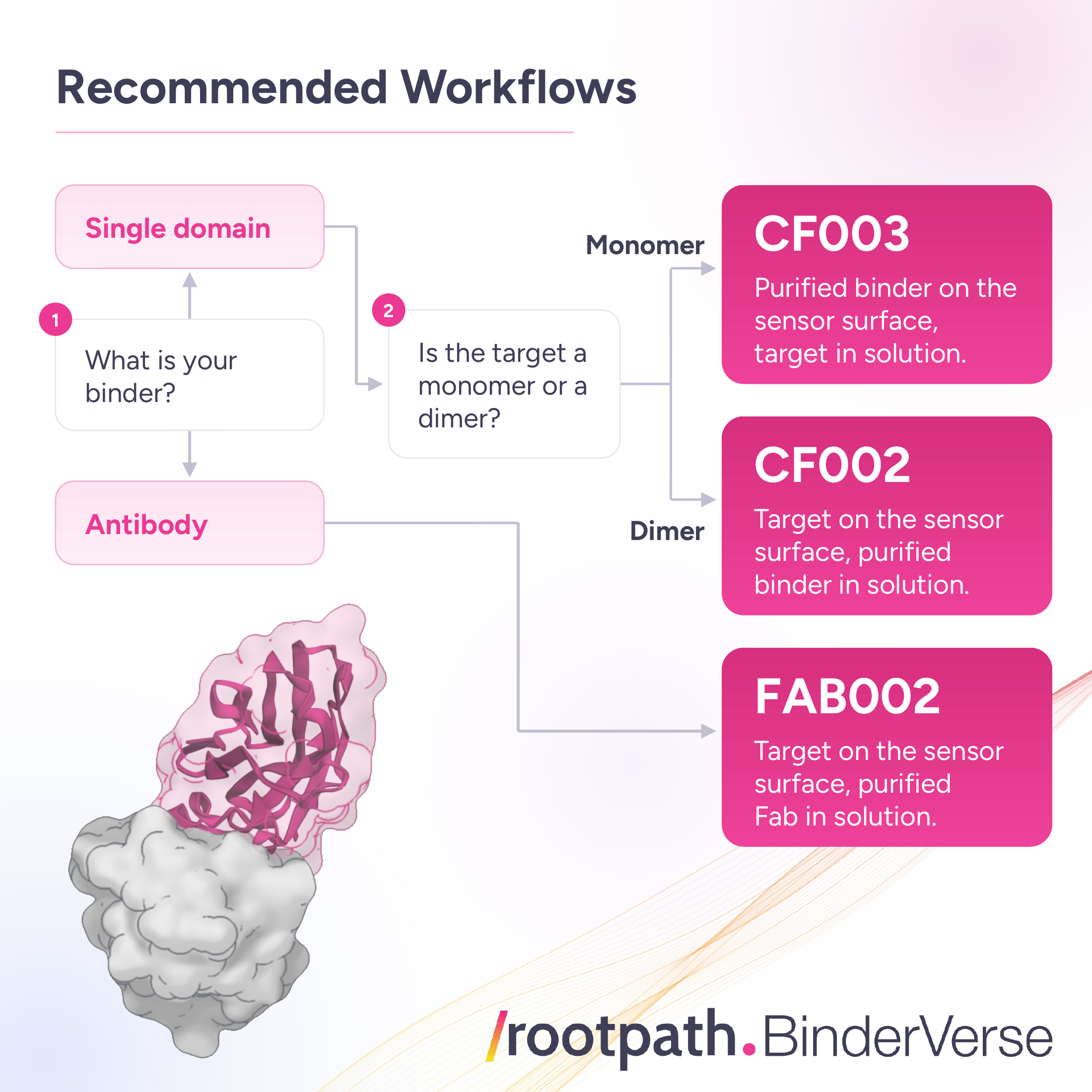
Figure 1. Choosing a BinderVerse workflow.
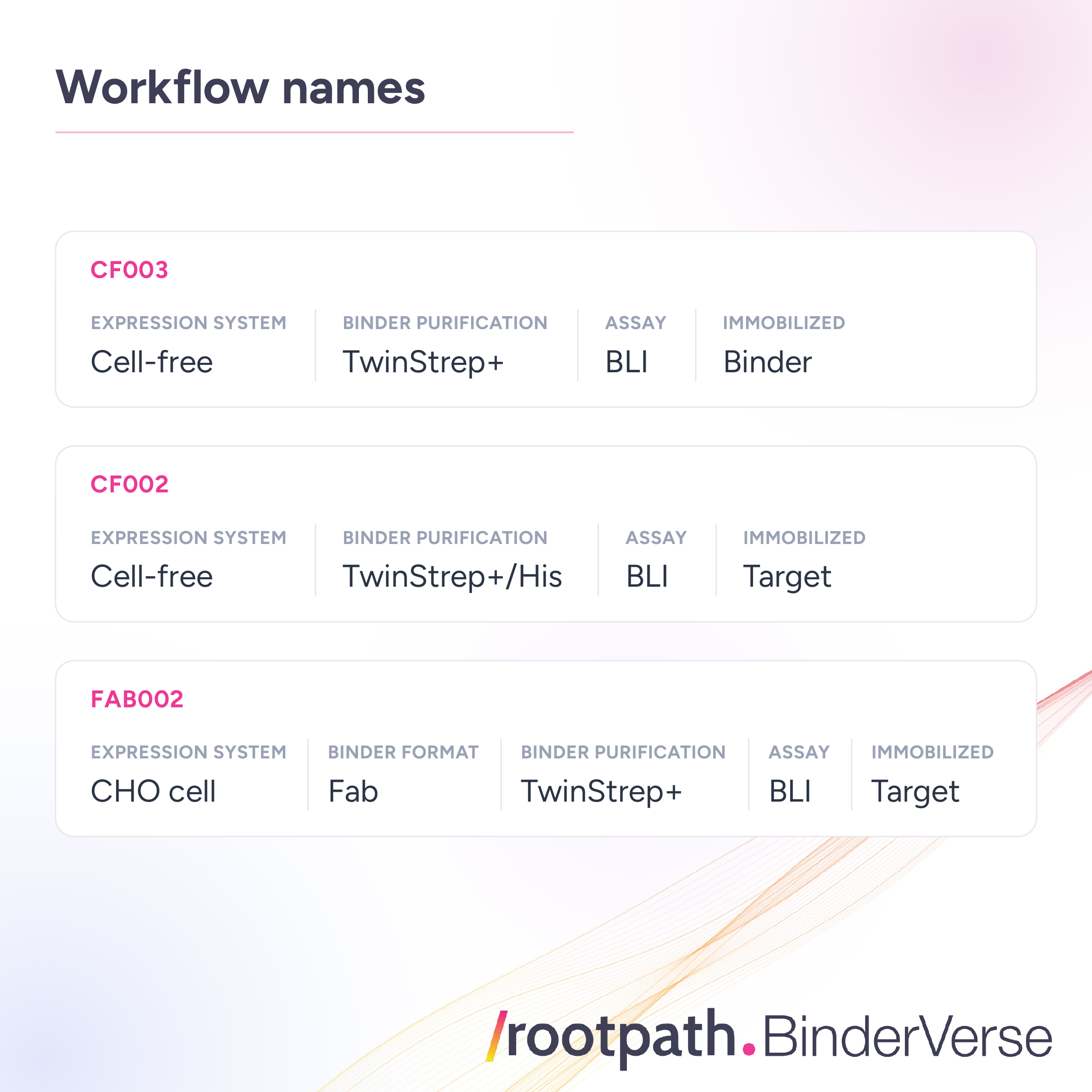
Figure 2. Meanings of each Workflow code
The rule underneath the whole chart
Every Workflow in Figure 1 measures binding by bio-layer interferometry (BLI), where one partner is immobilized on the biosensor (acting as the ligand in the vocabulary of BLI/SPR) and the other is in solution (acting as the analyte). That choice looks symmetric, and it is not. The partner in solution must be monovalent, or what you measure is avidity masquerading as affinity. A dimeric target in solution can grip two neighboring binders on the surface at once, and it then has to let go of both before either rebinds, which stretches the apparent off-rate and makes the $K_\text{D}$ look far better than reality. We devoted a whole post to that trap, in are your measurements fooled by valency, and the chart above is really that rule applied to the three cases we see in practice.
The second consideration is sensitivity. BLI signals scale with the mass that arrives at the surface, so the molecule you put in solution should be the heavier of the two whenever the valency rule lets you choose.
A purified binder, not a crude one
For a single-domain binder we recommend CF003 rather than CF001. The two differ in one respect: in CF001, the binder is loaded on the BLI/SPR surface straight out of the diluted cell-free protein synthesis (CFPS) reaction, while in CF003, it is purified first, on Strep-Tactin XT and then on Ni-NTA.
That purification is worth its cost here. A CFPS reaction is a lysate-based mixture, with ample opportunities for non-specific binding to the biosensor surface. Purifying the binder removes that confound, and because the purified binder is also quantified before it is loaded, in case of a negative result, you can better tell an expression problem from a binding problem.
CF001 still has its place. When you want a cheap yes-or-no answer across a large panel and don’t really care whether the failure is due to expression or binding, it is the fastest and cheapest way.
A monomeric target is a blessing
When the target is a monomer, the valency rule does not constrain you, and sensitivity decides instead. A minibinder or a VHH weighs roughly 10 to 15 kDa, while targets are usually much heavier. So CF003 immobilizes the binder and flows the target over it, and the heavy target delivers a strong, clean signal.
A dimeric target demands more careful planning
When the target is a dimer, either because the target dimerizes naturally, or is made as an Fc fusion, the valency rule should be the primary consideration, and CF002 is the better choice.
However, one price to pay when choosing CF002 is the lower, and therefore noisier, BLI signal, since the small binder is now the molecule in solution. You can rescue it by moving to SPR, which costs more than BLI, or by fusing the target to a large carrier such as MBP. We have generated good results with both options.
An antibody needs no second question
If your binder is an antibody, defined by a VH and a VL, we recommend FAB002 whatever your target is.
The reason is that a Fab settles both considerations at once. We express the antibody in CHO cells as a Fab fragment, purified through a TwinStrep tag on the Fd chain. A Fab carries exactly one binding site, so it is monovalent by construction and safe to put in solution no matter what the target does. And a Fab is about 50 kDa, heavy enough to give a strong signal as the analyte. The target goes on the sensor, the Fab is titrated over it, and the valency question never arises. This is also why we prefer a Fab to a full-length IgG for measurement. An IgG has two arms and is the thing the valency rule warns you about. So far the only case where we used the full-length IgG has been when the customer has already got binding data using full-length IgG elsewhere, and would like to see concordance between vendors.
If you are not sure which box you are in, or have a consideration this post does not cover, contact me and we’ll figure out the best option together. Email me at xi@rootpath.com or book an online meeting.
– Xi Chen